Youth programs
Four problems our students chose to solve
NeuroTrack, Naqi, Baladi, and Nafas each started as one sentence on a whiteboard. Here is what each team saw, and what they set out to build.
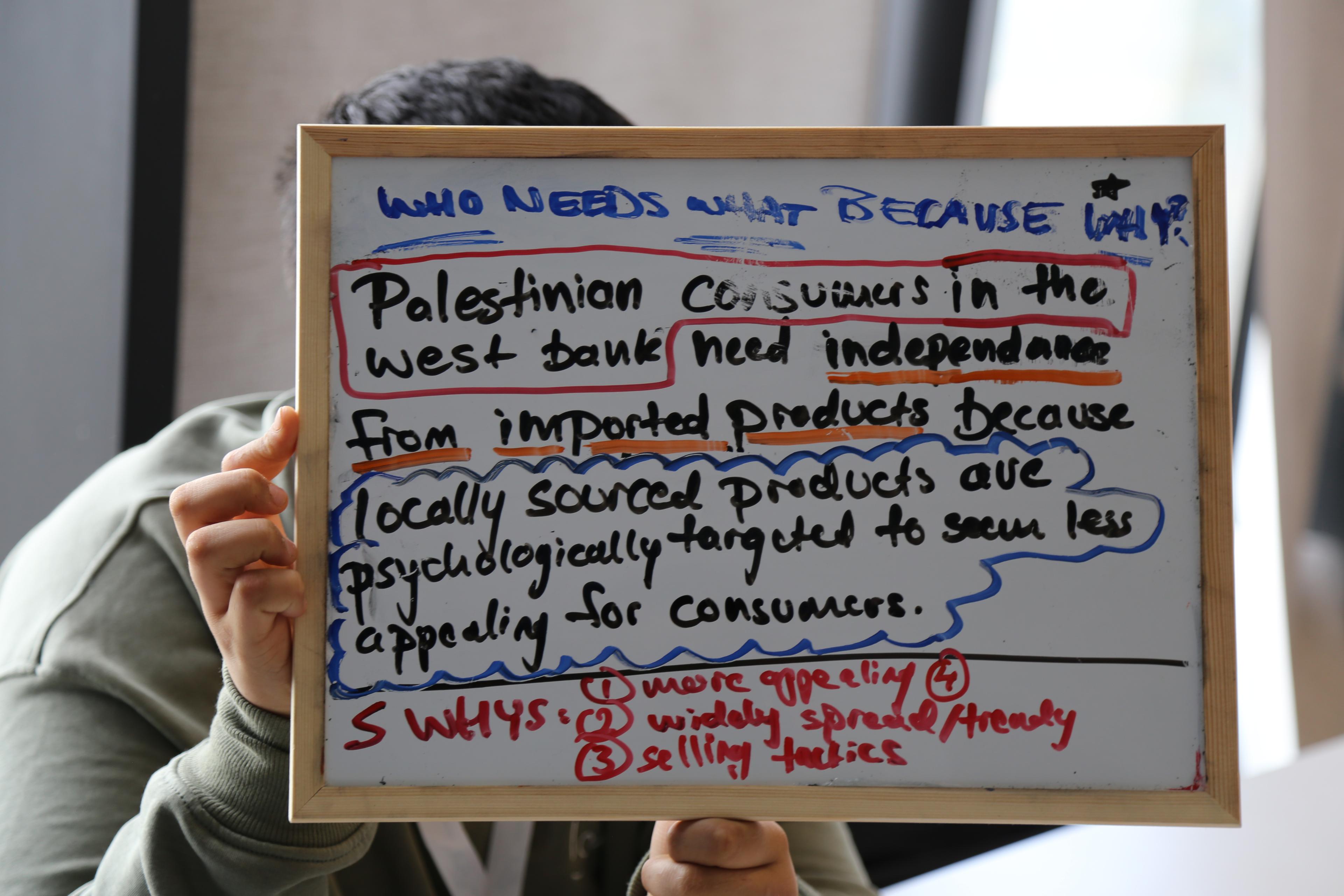
Every AYWA program starts the same way: not with an app idea, but with a sentence. Teams answer one question on a whiteboard, who needs what, because why?, and then ask "why" five more times until they reach the root of the problem.
It is slower than jumping straight to a solution. It is also what makes a project hold up when a mentor, a parent, or a judge starts asking hard questions. Here are four of the 13 projects from the past year, framed the way the teams framed them.
NeuroTrack
The problem: parents of neurodivergent children need a behavior-tracking platform, because long waitlists delay crucial care.
The idea: an online platform that turns the time spent on a waitlist into something useful, so families are not simply waiting.
Naqi
The problem: families are not invested in reducing their carbon footprint. They believe it is too expensive, and they struggle to find alternatives to the products they are used to.
The idea: discounts on eco-friendly products and actions, so budget-conscious families can save time, money, and the environment at once. Naqi means clean, or pure, in Arabic.
Baladi
The problem: Palestinian consumers need independence from imported products, because local products are psychologically targeted to seem unappealing.
The idea: help local Palestinian farmers sell and advertise their products, so buying local becomes the appealing choice. Baladi means local, or from my country.
Nafas
The problem: teenagers in Palestine need positive coping and emotional support, because stigma and low awareness leave them struggling in silence.
The idea: a judgment-free space where young people can access mental health support. Nafas means breath.
What the four have in common
Each one is rooted in everyday Palestinian life: a family waiting for care, a household budget, a farmer's stall, a teenager with no one to talk to. The people closest to a problem often see it most clearly. Our job is to give them the tools, the mentors, and the stage to do something about it.
See all four on the Youth Innovation Program page, or apply for the next program.
More stories
All stories
Our story
How AYWA came together
In Palestinian Arabic, aywa means yes. This is the story of how saying yes to young people's ideas grew into an ecosystem of students, young talent, and companies.
October 3, 2026 · 2 min read
Youth programs
Inside five days at a Youth Innovation Program
Five days, one community problem, and 30 seconds to pitch it. Here is how a week at an AYWA program is put together.
October 3, 2026 · 2 min read
Impact
A year of AYWA, in numbers
Three programs, more than 250 applicants, 40 scholarship students, 13 projects, and more than 10 sponsors. Here is what sits behind each number.
October 3, 2026 · 1 min read